
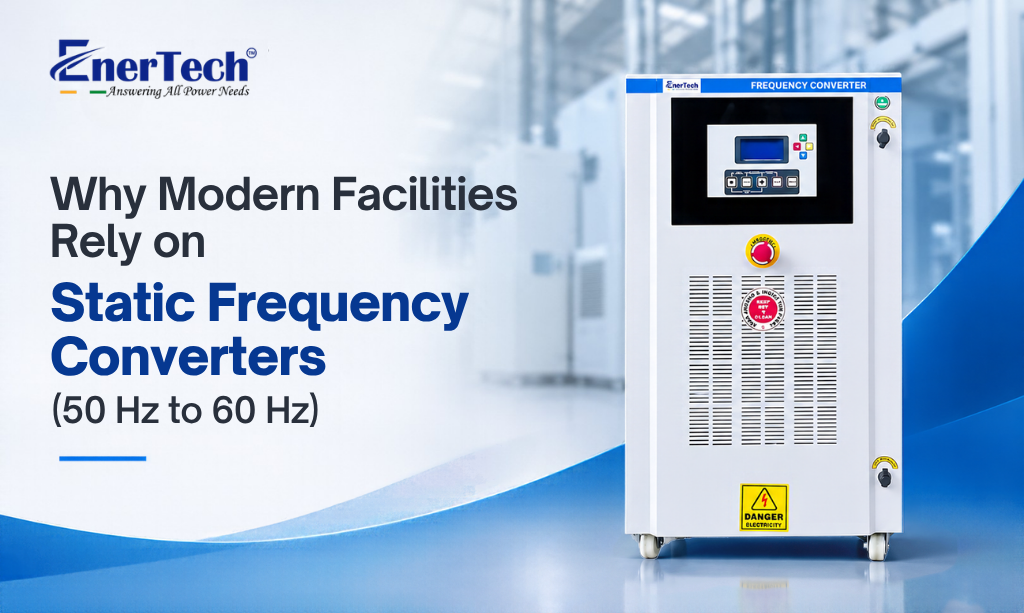
Modern industrial facilities operate equipment designed for different electrical standards, power requirements, and operating frequencies. International manufacturing, specialised machinery, imported equipment, and advanced testing systems often require compatible electrical supplies. Frequency conversion becomes essential when equipment designed for 60 Hz operates in a 50 Hz electrical environment.
A static frequency converter provides a controlled solution for converting electrical power from one frequency to another. It helps facilities operate equipment without depending on incompatible utility supplies. Converting 50 Hz power to 60 Hz supports electrical compatibility, operational flexibility, and equipment performance.
A frequency converter 50 to 60hz system is particularly useful for industrial plants, laboratories, manufacturing facilities, aviation infrastructure, and commercial installations. Understanding its operation and applications helps businesses select suitable power conversion technology.
Understanding Frequency Conversion from 50 Hz to 60 Hz
Electrical frequency represents the number of alternating current cycles completed every second. A 50 Hz supply completes 50 cycles per second, while a 60 Hz supply completes 60 cycles per second. Electrical equipment designed around these frequencies may require specific operating conditions.
Countries and industrial facilities use different electrical frequency standards. India, Europe, and several Asian markets commonly use 50 Hz power. The United States, Canada, and certain other regions generally use 60 Hz electrical systems.
Equipment manufactured for one frequency may not perform correctly when connected directly to another frequency. Differences can affect motor speed, magnetic characteristics, operating temperature, and electrical performance. Frequency conversion provides the required output frequency without changing the facility’s incoming utility supply.
A static frequency converter changes the incoming electrical frequency electronically. It converts input power into a controlled output suitable for equipment requiring a different frequency. This technology supports reliable operation across different electrical standards.
What Is a Static Frequency Converter?
A static frequency converter is an electronic power conversion system designed to change electrical supply frequency. Unlike rotating frequency converters, it uses semiconductor devices and electronic circuits. It does not depend on rotating mechanical components for frequency conversion.
The conversion process generally involves rectification, DC link processing, and inversion. Incoming alternating current is converted into direct current through a rectifier stage. The DC link stabilises and supports the intermediate power supply.
An inverter stage then converts the DC power into alternating current at the required output frequency. Modern switching technologies help regulate voltage, frequency, and output waveform quality. The resulting supply can support equipment requiring a specific electrical operating frequency.
A static frequency converter can provide different output frequencies according to equipment requirements. Common configurations include 50 Hz to 60 Hz, 60 Hz to 50 Hz, and variable-frequency outputs. Voltage adjustment may also be available depending on the converter design.
Modern static frequency converters are suitable for applications requiring precise electrical control. They provide flexibility for industrial equipment, testing systems, imported machinery, and specialised electrical installations.
Why Facilities Need 50 Hz to 60 Hz Conversion
Industrial facilities increasingly use machinery sourced from international manufacturers. Equipment may be designed according to the electrical standards of its manufacturing country. Operating such equipment with an incompatible frequency can create technical challenges.
A frequency converter 50 to 60hz installation helps overcome these compatibility issues. It allows facilities to operate imported equipment using their existing electrical infrastructure. Businesses can avoid major electrical modifications when properly designed conversion equipment meets the machinery’s requirements.
Frequency conversion is also important for specialised equipment that requires consistent operating conditions. Laboratory instruments, aerospace equipment, manufacturing machinery, and certain motor-driven systems depend on frequency-specific power supplies. A suitable converter helps provide the electrical conditions required for their operation.
Facilities also benefit from greater flexibility when integrating new machinery. They can accommodate equipment designed for different electrical standards without redesigning the entire power distribution system.
How a Static Frequency Converter Works
The conversion process begins with the incoming electrical supply. The converter receives power at the existing frequency, such as 50 Hz, and processes it electronically. Its internal components transform the electrical supply into a controlled output.
The rectifier converts incoming AC power into DC power. This intermediate DC supply passes through a DC link, which supports energy storage and voltage stabilisation. The inverter then generates a new AC waveform at the required frequency.
For a 50 Hz to 60 Hz conversion, the inverter produces an output waveform operating at 60 cycles per second. Depending on the system design, the converter may also regulate output voltage and manage electrical disturbances.
Modern converter designs incorporate control systems, protection mechanisms, monitoring functions, and electronic switching technologies. These features help maintain output stability under changing operating conditions.
The conversion process allows equipment to receive power according to its specified electrical requirements. It also provides a controlled interface between the facility’s utility supply and connected machinery.
Applications Across Modern Industrial Facilities
Static frequency converters support different industrial and commercial applications. Their usefulness depends on the connected equipment’s electrical requirements and operating characteristics.
Manufacturing facilities use frequency converters to operate imported production machinery. Equipment such as specialised pumps, motors, processing systems, and automated production lines may require 60 Hz power. Frequency conversion helps integrate these machines into existing 50 Hz infrastructure.
Testing laboratories require controlled electrical supplies for evaluating equipment performance. Test benches may operate machinery under specific voltage and frequency conditions. A static frequency converter helps establish the required supply during testing and validation activities.
Aviation and aerospace facilities may require frequency conversion for ground support equipment and specialised electrical systems. Certain installations use electrical equipment designed around different frequency standards. A converter provides the necessary electrical compatibility.
Commercial buildings, research facilities, and industrial infrastructure may also use frequency conversion for specialised equipment. These installations require careful assessment of connected loads, operating conditions, and power quality requirements.
Benefits of Using an Industrial Inverter for Frequency Conversion
An industrial inverter designed for frequency conversion offers controlled electrical output and flexible operation. Facilities can use it to support equipment requiring different electrical frequencies. This flexibility becomes valuable when integrating imported machinery or specialised production systems.
Electronic conversion eliminates dependence on mechanical frequency conversion arrangements. Static systems avoid rotating components used in conventional motor-generator configurations. This can simplify maintenance requirements and support compact equipment installations.
Output regulation is another important advantage. Depending on the converter design, operators can adjust output frequency and voltage. This supports equipment requiring specific electrical parameters during operation.
Modern industrial inverter systems also incorporate monitoring and protection functions. These may include overload protection, overtemperature protection, input monitoring, and fault indication. Such features help protect the converter and connected equipment against abnormal operating conditions.
Energy performance depends on converter design, connected load, operating conditions, and system efficiency. Selecting an appropriately rated converter helps avoid unnecessary losses associated with oversized or unsuitable equipment.
An industrial inverter should therefore be selected according to application requirements rather than frequency conversion alone.
Static Frequency Converter vs. Direct Utility Connection
Connecting equipment directly to a facility’s utility supply may not be suitable when the electrical frequency differs from its design specification. Frequency mismatch can influence motor operation, transformer performance, and equipment behaviour.
A static frequency converter provides an intermediate electrical conversion stage. It allows the incoming supply to be transformed into the required frequency before reaching connected equipment.
For example, machinery designed for 60 Hz operation may require a dedicated 60 Hz supply when installed in a facility receiving 50 Hz power. The converter provides this output while the facility continues receiving electricity from its existing utility connection.
However, frequency compatibility alone does not determine whether equipment can operate safely. Voltage requirements, current demand, phase configuration, starting characteristics, and waveform quality must also be considered.
The equipment manufacturer’s electrical specifications should always guide converter selection. Proper engineering evaluation helps establish whether frequency conversion is sufficient or additional electrical modifications are necessary.
Importance of Voltage and Frequency Regulation
Frequency and voltage are closely related to the operating characteristics of electrical equipment. Maintaining the required frequency helps equipment operate according to its intended electrical design.
Motors designed for 60 Hz may experience changes in operating speed when supplied with a different frequency. Voltage differences can also influence motor torque, current consumption, and temperature. Equipment performance may therefore depend on maintaining appropriate voltage and frequency together.
A static frequency converter can regulate these parameters according to its design capabilities. Some systems provide adjustable voltage alongside frequency control. Others offer specific output configurations for dedicated applications.
Voltage regulation becomes especially important when imported equipment requires a different voltage standard. Facilities should evaluate both incoming and outgoing voltage levels before selecting a frequency converter.
Reliable output regulation supports operational consistency. It also helps reduce electrical compatibility issues during equipment integration.
Selecting the Right Static Frequency Converter
Selecting a suitable static frequency converter requires a detailed understanding of the connected load. Frequency requirements provide the starting point, but other electrical characteristics determine the appropriate system rating.
The connected equipment’s rated power, voltage, phase configuration, current demand, and operating frequency should be reviewed. Motor loads may require additional consideration because starting currents can exceed normal operating currents.
The converter’s continuous power rating should match the actual application requirements. Facilities should also evaluate overload capacity, environmental conditions, cooling requirements, and expected operating duration.
Output waveform quality is another important selection criterion. Sensitive electronic equipment may require a converter with low harmonic distortion and stable output characteristics.
Control interfaces, monitoring capabilities, protection features, and installation arrangements can influence the final selection. Industrial facilities may also require integration with existing control panels or supervisory systems.
Working with an experienced power conversion manufacturer helps identify suitable configurations. Proper sizing and application assessment support reliable operation throughout the equipment’s service life.
Installation and Maintenance Considerations
Correct installation plays an important role in converter performance. The system should be installed according to manufacturer recommendations and applicable electrical safety standards.
Adequate ventilation and cooling are necessary to maintain operating temperatures. Converter installations should provide sufficient clearance for airflow, inspection, and maintenance activities.
Electrical connections must match the converter’s specified input and output requirements. Earthing, protective devices, cable sizing, and isolation arrangements should receive appropriate engineering attention.
Regular maintenance helps identify potential issues before they affect equipment operation. Inspection of cooling systems, electrical connections, ventilation paths, and monitoring indicators supports operational reliability.
Maintenance schedules should follow manufacturer recommendations and the facility’s operating conditions. Periodic inspection is particularly important in industrial environments involving dust, elevated temperatures, or continuous operation.
A properly installed and maintained static frequency converter supports stable electrical performance and dependable equipment integration.
Why EnerTech Static Frequency Converters Matter
Industrial power requirements continue to evolve as facilities adopt specialised machinery, international equipment, and advanced manufacturing technologies. Electrical compatibility remains essential for reliable operation and integration.
EnerTech UPS Pvt. Ltd. provides industrial power conversion solutions designed for demanding electrical applications. Its static frequency converter solutions support frequency conversion requirements across industrial and commercial installations.
Facilities requiring 50 Hz to 60 Hz conversion should evaluate equipment specifications, connected loads, voltage requirements, and operating conditions before selecting a converter. Choosing the right configuration helps establish a reliable electrical supply for specialised machinery.
A properly designed frequency conversion system supports operational flexibility, equipment compatibility, and dependable industrial performance. It also allows businesses to integrate machinery designed for different electrical standards into their existing infrastructure.
Conclusion
Modern facilities rely on static frequency converters to operate equipment requiring different electrical frequencies. Converting 50 Hz power to 60 Hz helps overcome compatibility challenges associated with imported machinery and specialised industrial applications.
A frequency converter 50 to 60hz system provides controlled electrical conversion through electronic rectification and inversion. It supports manufacturing equipment, laboratories, testing systems, and other installations requiring frequency-specific power.
Selecting the right static frequency converter requires evaluating voltage, frequency, load capacity, waveform quality, and protection requirements. Proper installation and maintenance further support dependable operation.
As industrial facilities continue adopting international equipment, static frequency converters remain important components of modern power infrastructure.
Frequently Asked Questions
1. What is a frequency converter 50 to 60hz?
A frequency converter 50 to 60hz changes incoming electrical power from 50 Hz to 60 Hz. It enables compatible equipment designed for 60 Hz operation to receive the required frequency.
2. What is a static frequency converter?
A static frequency converter uses electronic components to convert electrical power from one frequency to another. It typically includes rectification, a DC link, and an inverter stage.
3. Why do industrial facilities require 50 Hz to 60 Hz conversion?
Facilities require frequency conversion when imported machinery or specialised equipment operates at 60 Hz. Conversion helps integrate this equipment with existing 50 Hz electrical infrastructure.
4. Can a static frequency converter change voltage?
Yes, certain static frequency converters provide voltage adjustment alongside frequency conversion. The available voltage range depends on the converter’s design and configuration.
5. What equipment uses static frequency converters?
Manufacturing machinery, laboratory equipment, testing systems, aviation ground equipment, specialised motors, and imported industrial machines may require frequency converters.
6. Is an industrial inverter the same as a static frequency converter?
An industrial inverter converts DC power into AC power. A static frequency converter generally includes conversion stages that transform incoming AC power into a different output frequency.
7. Does frequency conversion affect motor speed?
Yes, motor speed is related to supply frequency. Converting the supply frequency can change motor operating speed, depending on motor design and operating conditions.
8. How do I select a static frequency converter?
Selection depends on power rating, input voltage, output voltage, frequency, phase configuration, load characteristics, overload requirements, and operating environment.
10. Are static frequency converters suitable for continuous operation?
Many industrial static frequency converters are designed for continuous operation. Suitability depends on equipment ratings, cooling arrangements, environmental conditions, and application requirements.
11. What maintenance does a static frequency converter require?
Maintenance typically includes inspecting cooling fans, ventilation, electrical connections, protective systems, and monitoring indicators. Manufacturer-recommended maintenance schedules should be followed.