Online UPS System: Complete Guide to Features, Benefits, and Choosing the Right Solution
Power outages, voltage spikes, and unstable grid supply are a daily reality for Indian homes, offices, and factories. A single unplanned shutdown can corrupt data, damage sensitive equipment, or halt an entire production line. This is exactly the problem an online UPS system is built to solve. Unlike ordinary backup devices that react after a fault occurs, an online UPS keeps equipment running on continuously conditioned power, with zero transfer time between mains and battery. This guide covers how an online UPS works, its core features and benefits, what drives online UPS price in India, and how to evaluate online UPS manufacturers in India before you buy.
What Is an Online UPS System?
An online UPS system, also called a double-conversion UPS, continuously converts incoming AC power to DC and back to AC before it ever reaches the connected load. Because the load always runs off the inverter output rather than raw mains supply, there is no switchover delay when the grid fails; the battery is perpetually in the power path, so the transition from mains to battery is completely seamless.
This differs from offline or line-interactive UPS systems, which switch to battery power only after detecting a fault, causing a brief but real transfer delay. For data centres, hospitals, process automation, and telecom infrastructure, even a few milliseconds of interruption can be costly, which is why an online UPS system is the preferred choice wherever uptime and power quality genuinely matter.
How an Online UPS Works: Double Conversion Explained
Incoming AC mains first passes through a rectifier, which converts it to DC and simultaneously charges the battery bank. This DC power then feeds an inverter, which reconverts it to clean, regulated AC before supplying the load. Because the inverter is always active and the load never touches raw utility power, an online UPS system corrects voltage fluctuations, filters harmonics, and regulates frequency in real time, regardless of what is happening on the grid.
When mains power fails entirely, the battery simply continues supplying DC to the inverter without any switching event, which is why online UPS systems are rated for true zero transfer time. This design also isolates connected equipment from spikes, sags, brownouts, and frequency drift that would otherwise pass through to sensitive electronics.
Key Features of a Modern Online UPS
A well-engineered online UPS brings far more than basic battery backup:
- Zero transfer time and true sine wave output, protecting motors, servers, and medical devices from waveform distortion.
- Wide input voltage window, allowing battery-free operation during moderate fluctuations, which extends battery life.
- High input power factor and low harmonic distortion, reducing load on generators and upstream transformers.
- Parallel redundancy and scalability, so multiple units can share load or provide N+1 protection as requirements grow.
- IGBT-based rectifiers and inverters, delivering higher efficiency and better thermal performance than older SCR-based designs.
- Remote monitoring and IoT connectivity, giving facility teams real-time visibility into load, battery health, and alarms.
- Built-in bypass and maintenance switches, allowing servicing without powering down connected equipment.
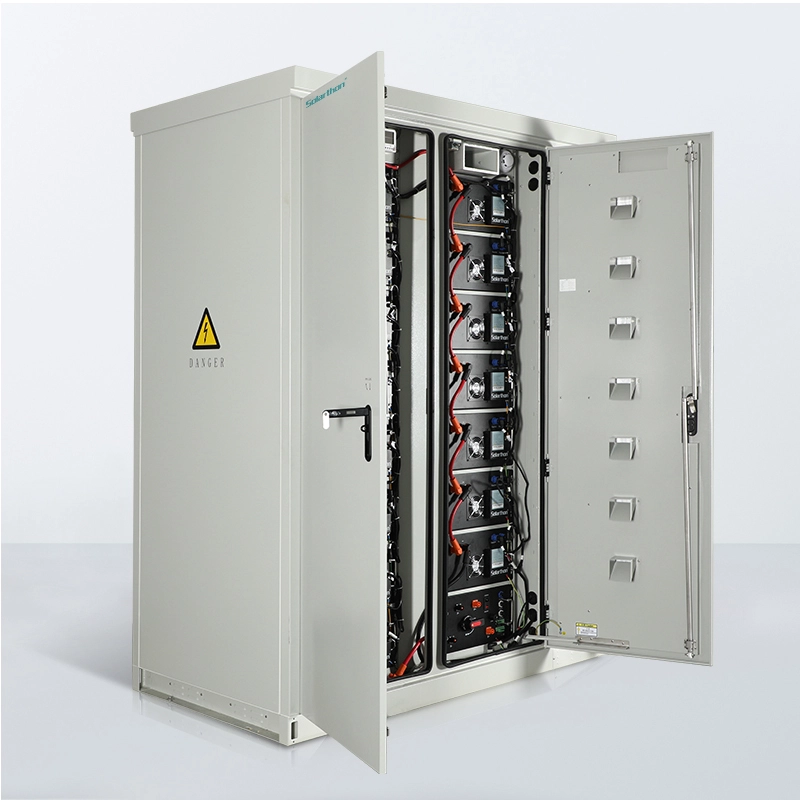
- Compatibility with multiple battery chemistries, including VRLA, Ni-Cad, and lithium-ion, matched to required backup duration.
Benefits of Installing an Online UPS System
The core benefit of an online UPS system is uninterrupted, conditioned power, but the downstream advantages go further.
Equipment protection: continuous voltage and frequency regulation prevents the gradual degradation that unstable power causes in motors, PLCs, servers, and medical equipment.
Data integrity: zero transfer time means no corrupted transactions or unplanned reboots during a grid event.
Lower total cost of ownership: fewer equipment failures and longer asset life offset the higher upfront cost versus basic UPS types.
Operational continuity: manufacturing lines, hospitals, and data centres avoid downtime costs that usually exceed the price of the UPS itself.
Scalability: modular, parallel-capable systems let you add capacity as your facility grows without replacing the installation.
Compliance and safety: many industrial and healthcare applications require certified, regulated power as part of statutory or accreditation requirements.
Online UPS Price in India: What Affects the Cost
Online UPS price varies widely depending on capacity, phase configuration, and the technology inside the unit, so no single figure applies across the board. Key factors driving the final quote include:
Capacity (kVA rating): larger ratings cost more, and pricing is rarely linear since higher-capacity units carry heavier-duty components.
Phase configuration: a single-phase (1-1 Ph) online UPS is typically the most economical option for small offices, while three-phase (3-3 Ph) systems for industrial loads command a higher online UPS price due to build complexity.
Battery bank and backup time: longer backup duration requires a larger battery bank, often the single biggest variable in overall cost.
Technology and efficiency class: IGBT-based, high-efficiency designs cost more upfront than older SCR-based systems but reduce running costs over the system’s lifetime.
Monitoring features: remote monitoring, IoT dashboards, and SNMP cards add to the base price but reduce maintenance visits and downtime risk.
Service network: manufacturers with strong pan-India coverage may price installations slightly higher, generally offset by faster response times and lower lifetime costs.
Because of this variability, the most reliable way to get an accurate Online UPS price is to share your load profile, required backup time, and site conditions with a manufacturer directly, rather than relying on a generic price list.
Choosing Among Online UPS Manufacturers in India
India has a mature base of online UPS manufacturers, from large multinational brands to specialised domestic engineering companies. When comparing online UPS manufacturers in India, evaluate them against these criteria rather than price alone:
Manufacturing depth: companies with in-house design, an R&D facility, and their own production line typically offer better quality control and faster customisation than pure trading operations.
Certifications: look for BIS certification, IEC compliance, and ISO 9001:2015 quality management certification, along with any sector-specific approvals.
Track record: a manufacturer with a large installed base across manufacturing, healthcare, IT, and government projects has demonstrated reliability under real Indian grid conditions, which are often harsher than lab test conditions.
Range and customisation: the best online UPS manufacturers in India offer a full range, from small single-phase units for offices to large three-phase industrial systems, with the ability to customise for unusual load requirements.
Local engineering support: since grid conditions vary significantly across Indian states, a manufacturer with local application engineering can size and configure a system more accurately than one working purely off a datasheet.
How to Pick the Right Online UPS Supplier
Choosing an online UPS supplier affects your facility for the next decade or more, so it deserves the same diligence as any other capital equipment purchase. Confirm that the supplier is either the manufacturer or an authorised channel partner, since this affects warranty validity and spare parts availability. Ask for references from customers in your own industry, since experience with hospital deployments does not necessarily translate to heavy industrial loads.
A dependable online UPS supplier should walk you through a proper load study, recommend the right kVA rating and backup time rather than simply upselling capacity, and provide clear documentation on warranty terms, annual maintenance contracts, and spare parts lead times. Ask about average on-site response time, particularly if your facility runs critical operations around the clock. Finally, favour suppliers who offer transparent, itemised quotations over those who bundle everything into one number, since this makes it easier to compare online UPS price across vendors on a like-for-like basis.
Industries That Rely on Online UPS Systems
Online UPS systems are deployed wherever continuous, clean power is non-negotiable. Data centres and server rooms depend on them to prevent data loss and hardware damage during grid events. Hospitals and diagnostic centres use them to keep imaging equipment, ICUs, and laboratory instruments running without interruption. Manufacturing plants rely on online UPS systems to protect PLCs, robotics, and automated lines from the production losses even a brief power dip can cause. Banking, telecom, and government infrastructure also depend heavily on online UPS protection to maintain service continuity for the public.
Frequently Asked Questions
What is the difference between an online UPS and an offline UPS?
An online UPS continuously runs the load through its inverter with zero transfer time, while an offline UPS switches to battery only after detecting a power failure, resulting in a brief switchover delay that an online system avoids entirely.
What kVA rating do I need for my online UPS system?
The right kVA rating depends on your total connected load plus a safety margin for future expansion, typically calculated from the combined wattage of all equipment you intend to protect, along with the load’s power factor.
How long does an online UPS battery last during a power cut?
Backup time depends on the size of the battery bank relative to the connected load; a larger bank extends runtime, and many industrial online UPS systems are configured for 15 minutes to several hours of backup.
Is online UPS price higher than other UPS types?
Yes, online UPS systems typically cost more upfront than offline or line-interactive types because of their double-conversion architecture, but they deliver better equipment protection and lower long-term maintenance costs for critical loads.
Can an online UPS system work with solar power?
Many modern online UPS systems can be integrated with solar inverters or hybrid solar UPS configurations, allowing facilities to combine renewable generation with guaranteed backup power.
What maintenance does an online UPS require?
Routine maintenance includes periodic battery health checks, cleaning of ventilation and cooling components, firmware updates for monitoring systems, and scheduled inspections under an annual maintenance contract.
How do I compare online UPS manufacturers in India?
Compare manufacturers on certifications such as BIS and ISO, in-house manufacturing and R&D capability, installed base across relevant industries, product range, and the strength of their local service network.
Can an online UPS system be scaled up later?
Many online UPS systems, particularly modular and parallel-capable models, can be scaled by adding units or battery banks as power requirements grow, without replacing the existing installation.
What is the typical warranty period for an online UPS?
Warranty periods vary by manufacturer and component, generally covering electronics for one to two years as standard, with extended warranty and annual maintenance contract options available for both the UPS and the battery bank.
Choose a Reliable Online UPS Partner
Whether you need a single-phase unit for an office or a large three-phase system for an industrial facility, EnerTech UPS Pvt Ltd can help size the right solution and provide a transparent online UPS price for your requirement. Get in touch with EnerTech UPS Pvt Ltd today at sales@enertechups.com to discuss your online UPS system requirements and request a detailed quotation.