Energy Solutions can help you reduce your electricity bills
Commercial Enquiry :
+919373336340 | +919822407189
sales@enertechups.com
Customer Care & Support: +919373679255 support@enertechups.com
Careers:
+919075088292
hr@enertechups.com

EnerTech’s VRLA (SMF) batteries deliver maintenance-free, spill-proof backup power with proven 5-8 year service life. Designed for UPS systems, solar installations, telecom towers & emergency lighting. Available in 12V/2V configurations from 7Ah to 200Ah. Features low self-discharge, deep cycle capability & wide temperature tolerance (-15°C to 50°C). BIS certified. Pair with any EnerTech inverter or UPS.
Products Not Found


| Technical | Specification |
|---|---|
| Parameter | VRLA Battery Specification |
| Chemistry | Lead-Acid (Sealed Design) |
| Nominal Cell Voltage | 2.0V per cell |
| Float Voltage | 2.27V per cell @ 25°C |
| Charge Voltage (Boost) | 2.40-2.45V per cell @ 25°C |
| Discharge Cutoff | 1.75V per cell (typical) |
| Specific Energy | 30-50 Wh/kg |
| Energy Density (Volumetric) | 60-90 Wh/L |
| Cycle Life (50% DOD) | 400-600 cycles (AGM) |
| Cycle Life (30% DOD) | 800-1,200 cycles |
| Design Life | 3-5 years (standby), 5-10 years (premium) |
| Self-Discharge Rate | 3-5% per month @ 20°C |
| Charge Efficiency | 85-95% |
| Operating Temperature (Float) | -20°C to +50°C |
| Optimal Temperature | +20°C to +25°C |
| Discharge Rate (Typical) | C/5 to C/20 (5-20 hour rates) |
| Internal Resistance | Low (AGM), Moderate (Gel) |
| Maintenance | None required (sealed design) |
| Mounting Orientation | Any except inverted |
| Lifespan Temperature Sensitivity | Halves every 8°C above 25°C |
VRLA batteries are "sealed" but not hermetically closed. A pressure relief valve prevents rupture during overcharge or fault conditions by venting excess gas. Under normal operation, internal gas recombination converts hydrogen and oxygen back to water, eliminating water loss and maintenance.
Electrolyte absorbed in porous fiberglass mat separators between plates. Most common VRLA type for UPS and backup power applications.

Absorbent Glass Mat (AGM) Electrolyte absorbed in porous fiberglass mat separators between plates. Most common VRLA type for UPS and backup power applications.

Electrolyte immobilized by mixing with silica gel, creating thick paste-like consistency.

No water addition required. No acid level checks. No corrosion cleaning. Install and operate for years without intervention. Ideal for remote sites, inaccessible locations, and applications where maintenance personnel are unavailable.

VRLA batteries can be transported and operated in any orientation (except inverted) without electrolyte leakage. Safe for installation in occupied spaces, vehicles, boats, and enclosed equipment cabinets.

Internal gas recombination eliminates hydrogen venting during normal float charging. Reduces ventilation requirements and eliminates explosion risk from hydrogen accumulation in confined spaces.

VRLA batteries cost 50-70% less than equivalent lithium LFP capacity. For applications requiring short backup durations or infrequent cycling, VRLA's lower capital cost provides better ROI than lithium.

Decades of VRLA deployment mean virtually all UPS systems, battery chargers, and solar charge controllers include VRLA-compatible charging profiles. No specialized charging equipment required.

VRLA technology matured in the 1980s with millions of installations providing predictable performance data. Failure modes well understood. Extensive standards and specifications. Risk-free technology selection for conservative applications.

VRLA batteries designed primarily for standby applications (float charging with infrequent discharge). Deep cycling (>50% DOD) reduces life to 300-600 cycles versus 6,000+ for lithium LFP. Not ideal for daily solar cycling applications.

VRLA battery life halves for every 8°C above optimal 25°C. Operating at 35°C reduces 10- year design life to 5 years. Operating at 45°C reduces it to 2.5 years. Challenging for outdoor installations in hot climates.

VRLA batteries lose capacity gradually over time even without cycling. 5-year battery may only deliver 70-80% of rated capacity by end of life. Requires oversizing to ensure backup duration throughout service life.

VRLA batteries weigh 3-4× more than equivalent lithium LFP capacity. Size and weight constraints often favor lithium for space-limited applications despite higher cost.

VRLA batteries require 8-12 hours to fully recharge after deep discharge versus 2-3 hours for lithium. Limits suitability for applications requiring rapid battery recovery between discharge events.

Lead-acid capacity drops significantly in cold temperatures. At -20°C, VRLA batteries deliver only 50% of rated capacity. Electrolyte can freeze if discharged below 50% capacity in extreme cold.
| Characteristic | VRLA (Sealed) | Flooded Lead-Acid |
|---|---|---|
| Maintenance | None required | Quarterly water addition |
| Mounting Orientation | Any (not inverted) | Upright only |
| Hydrogen Venting | Minimal (recombination) | Significant (requires ventilation) |
| Acid Spill Risk | Spill-proof | Risk if tipped |
| Initial Cost | Higher | Lower |
| Cycle Life | 400-600 cycles | 800-1,500 cycles (deep cycle) |
| Design Life | 3-10 years | 10-20 years (flooded) |
| Self-Discharge | 3-5%/month | 10-20%/month |
| Application | UPS, telecom, standby | Renewable energy, traction |
Maintenance access limited, indoor installation, short backup durations, moderate cycling
Daily cycling (solar/wind), budget-constrained, maintenance available, maximum lifespan
critical
| Characteristic | VRLA AGM | Lithium LFP |
|---|---|---|
| Initial Cost | Baseline | 2-3× higher |
| Energy Density | 30-50 Wh/kg | 90-160 Wh/kg |
| Weight (100Ah 12V) | ~30 kg | ~12 kg |
| Usable Capacity | 50% DOD max | 90% DOD typical |
| Cycle Life (Deep) | 300-600 cycles | 6,000-8,000 cycles |
| Design Life | 3-5 years (5-10 premium) | 15-20 years |
| Charge Time | 8-12 hours | 2-3 hours |
| Maintenance | None | None |
| Operating Temperature | -20°C to +50°C | -20°C to +50°C |
| Temperature Sensitivity | High (life halves/8°C) | Moderate |
| Self-Discharge | 3-5%/month | <3%/month |
| Safety | Proven, acid/H₂ risks | Safest lithium chemistry |
| Total Cost (20 years) | Higher (replacements) | Lower (longevity) |
Cell towers, central offices, and remote radio sites use VRLA batteries for backup during
utility outages. Sealed design and maintenance-free operation critical for remote locations.

Building codes require emergency lighting battery backup. VRLA batteries' long float life (10+ years possible), sealed design, and compatibility with code-required test procedures make them standard for this application.

Burglar alarms, fire alarms, access control panels, and CCTV systems use VRLA batteries for backup power during AC failure or line cuts.

Hospital equipment, emergency call systems, and portable medical devices rely on VRLA batteries for backup power in non-critical applications (lithium preferred for critical patient care equipment).

Small solar systems (<5kWh storage) sometimes use VRLA batteries when budget constraints prohibit lithium. Daily cycling reduces VRLA life to 2-3 years versus 15+ for lithium. Total cost of ownership often favors lithium despite higher initial cost.
VRLA batteries require -3mV per cell per degree C above 25°C. Without temperature
compensation, fixed voltage causes overcharge in hot weather (drying out) and undercharge
in cold weather (sulfation).
12V battery (6 cells) at 35°C
Compensation: -3mV × 6 cells × 10°C = -180mV
Adjusted float: 13.6V – 0.18V = 13.42V
"Maintenance-Free" Does NOT Mean "No Monitoring" While VRLA batteries require no water addition, they still need monitoring to detect degradation before catastrophic failure during discharge.
VRLA batteries benefit from the most mature recycling infrastructure of any battery
technology. Over 97% of lead-acid batteries are recycled in developed markets—the highest
recycling rate of any consumer product.
Lead-acid battery recycling is economically profitable due to lead value. Old batteries are
collected, broken down, and lead is smelted for reuse in new batteries. This closed-loop
system operates without government subsidies.
While lead is toxic, the established recycling infrastructure and high recycling rates minimize
environmental release. Properly managed lead-acid battery systems pose minimal
environmental risk throughout lifecycle.
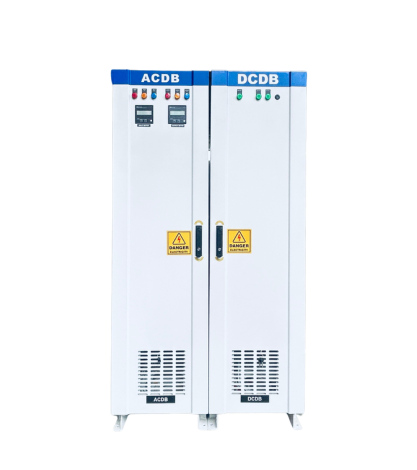
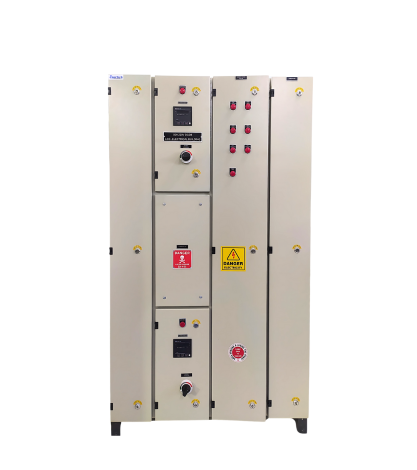
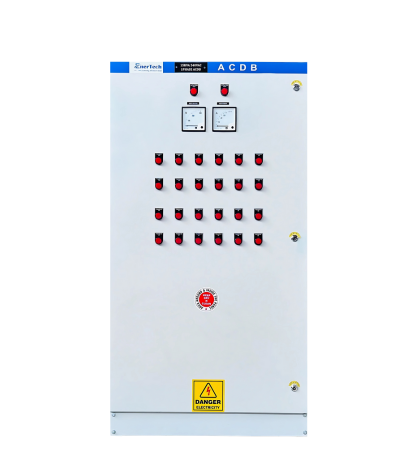
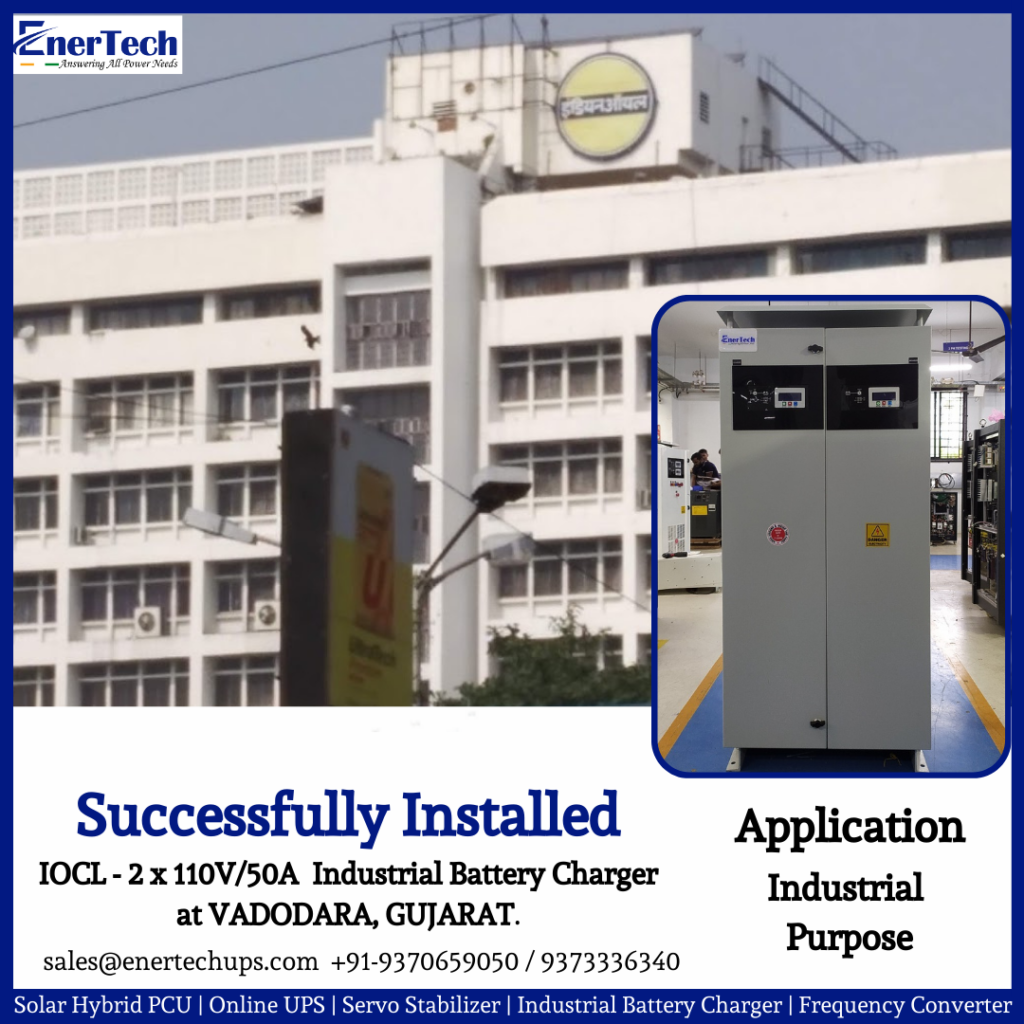
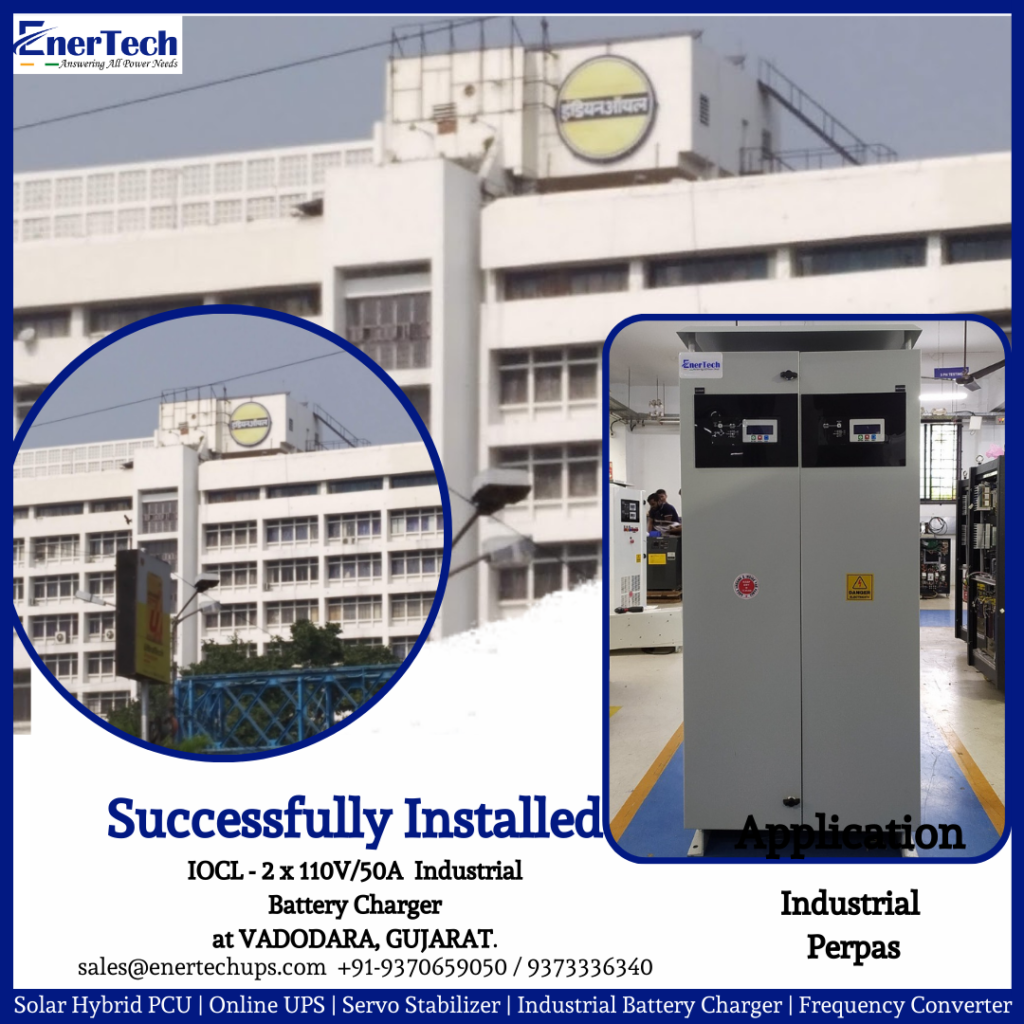
IGBT-Based Battery Charger (Compatible with VRLA)
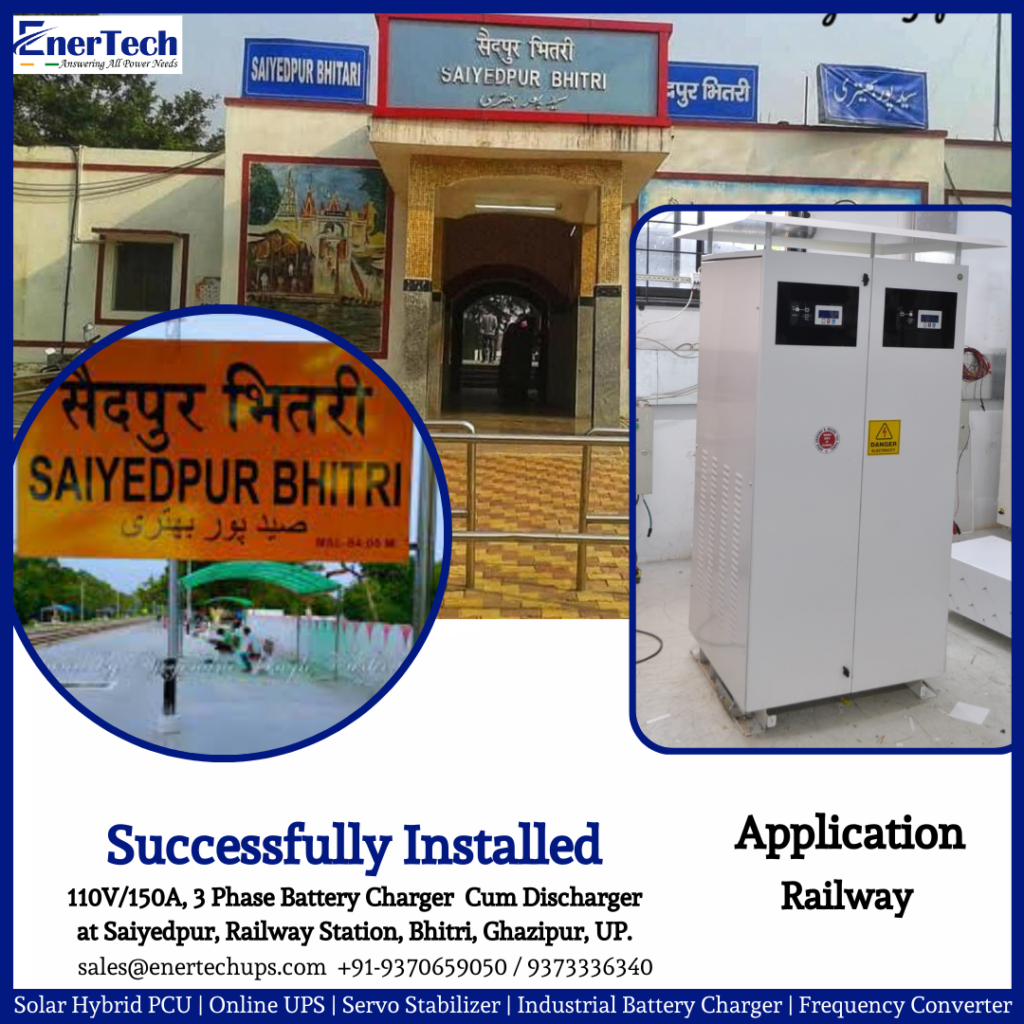
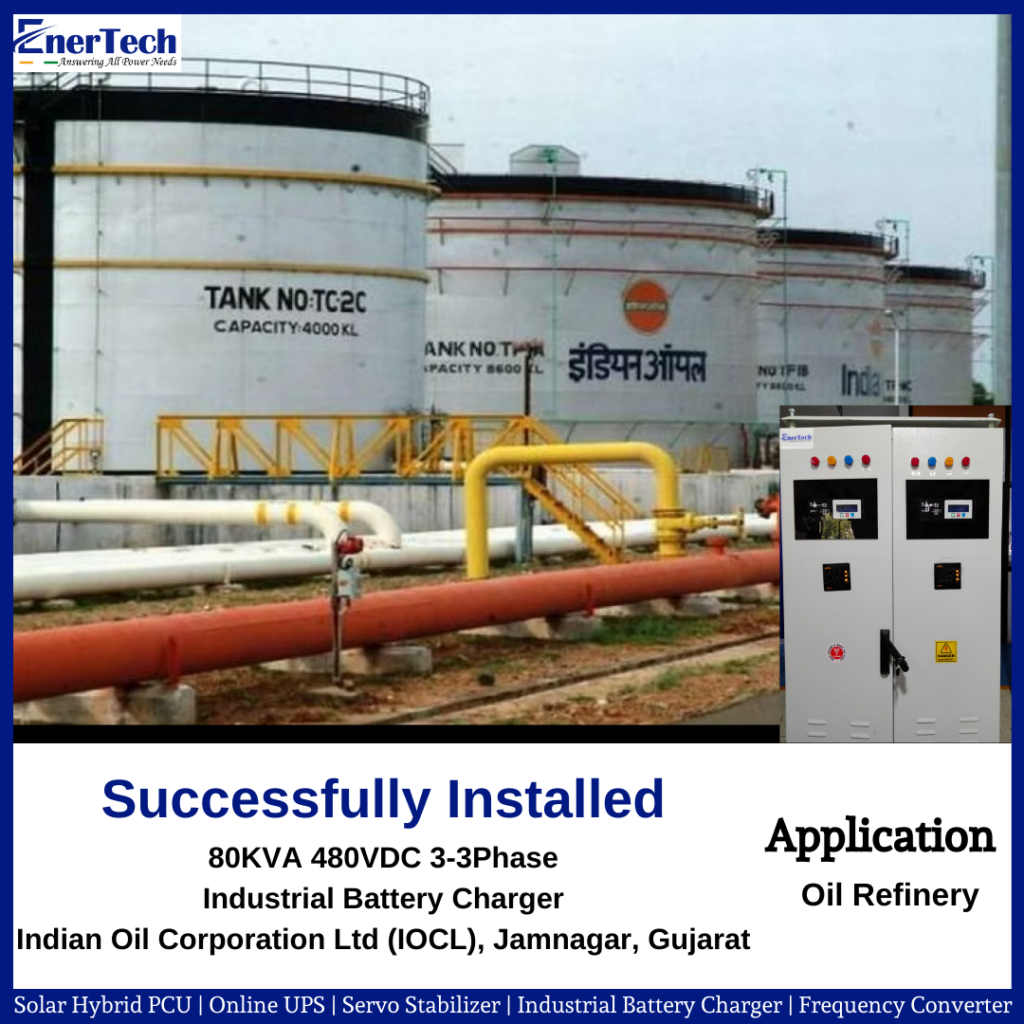
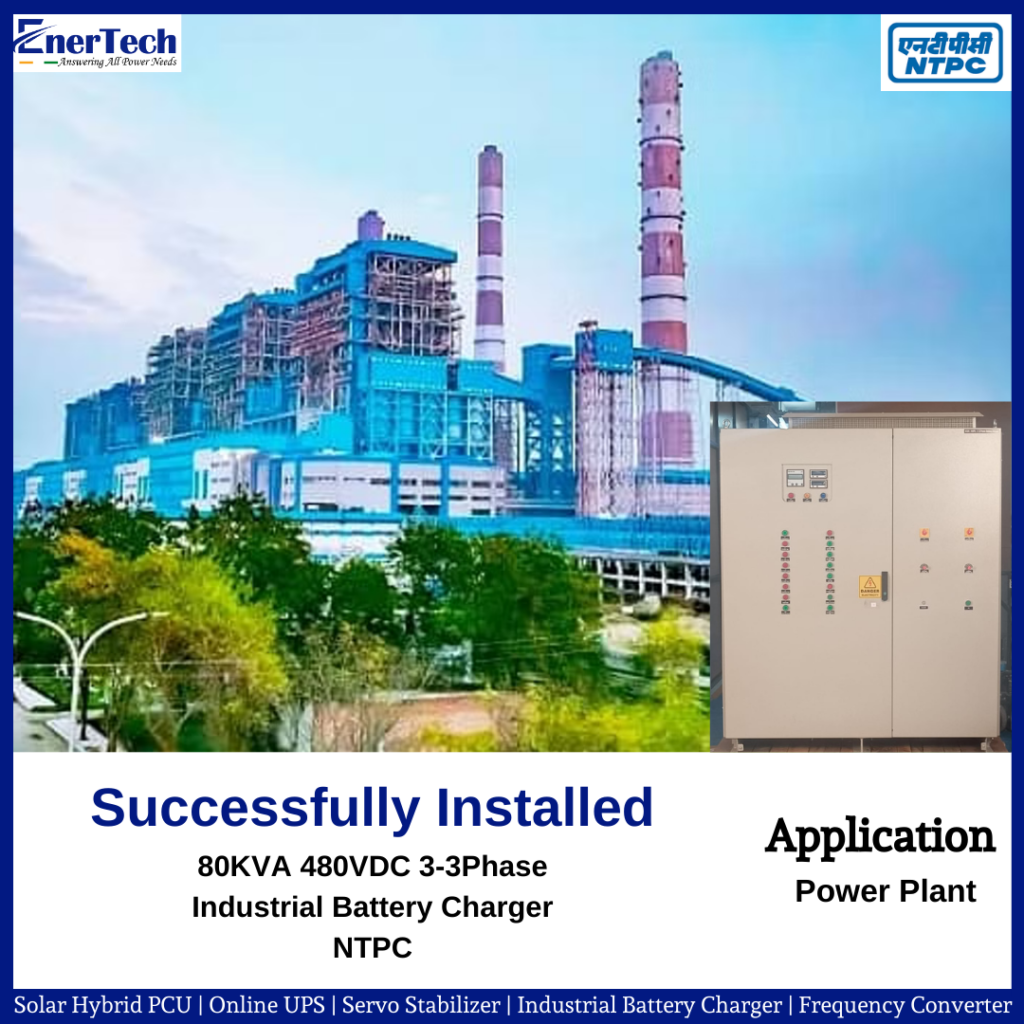
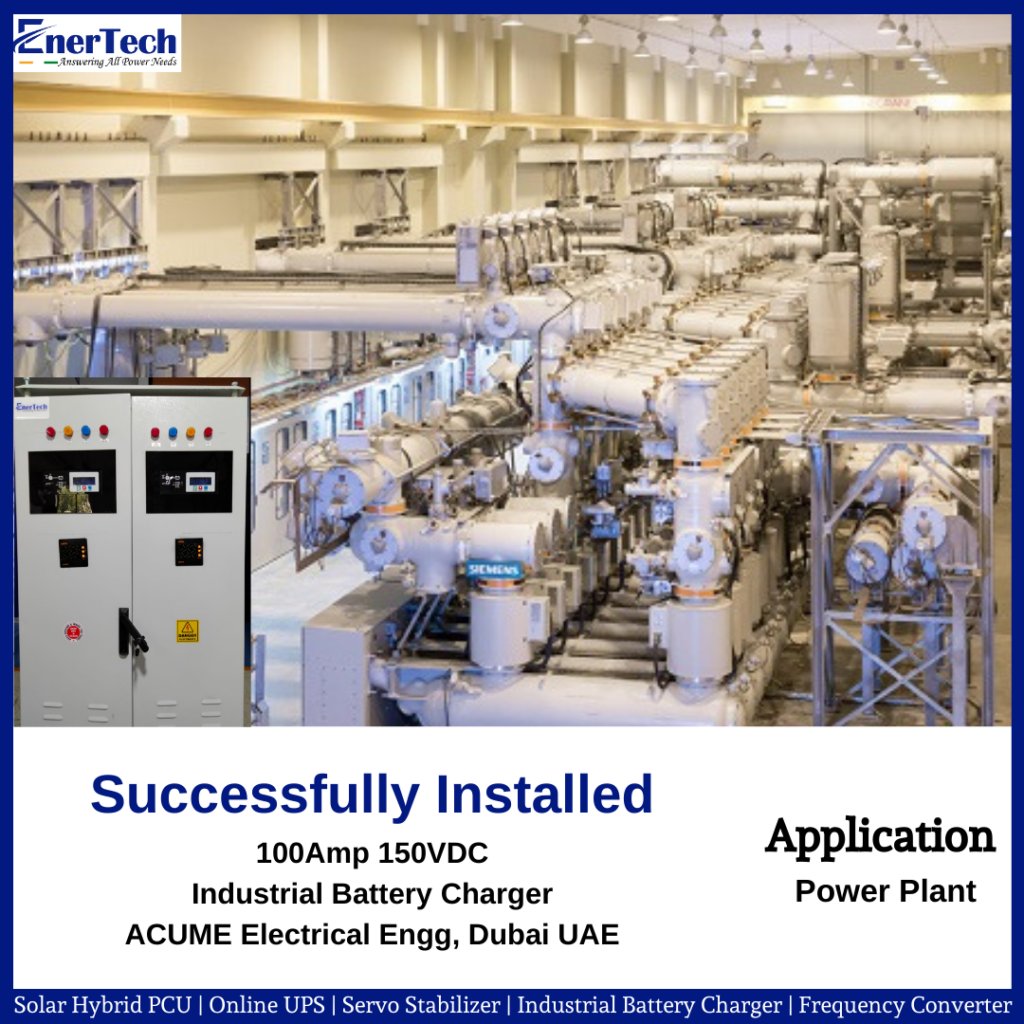
EnerTech's IGBT Battery Chargers support VRLA batteries (both vented and gas- recombination types) with advanced charging features:
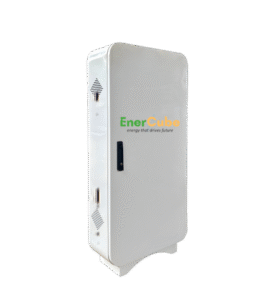
While EnerCube's modern energy storage systems primarily utilize LFP batteries for superior cycle life and performance, legacy installations and specific applications can integrate VRLA batteries where appropriate:
Delivering success through 35,000+ satisfied customers over the past 35+ years with our impeccable Battery Energy Storage System Installation.


EnerTech VRLA-Compatible Products:
IGBT-Based Battery Charger for Ni-Cad
Battery System Design & Consultation
VRLA vs. Lithium Comparison Guide
Trusted by industries, businesses, and institutions for reliable solar and energy storage solutions. Proven performance backed by decades of engineering excellence and customer confidence.
A: Design life varies: 3-5 years (standard UPS), 5-10 years (long-life/premium), 10-12 years
(special long-life designs). Actual life depends heavily on temperature and depth of
discharge. Operating at 35°C instead of 25°C cuts life in half.
A: Often yes, but verify: 1) Charger compatibility (voltage limits, charge profile), 2) Physical
dimensions, 3) BMS integration requirements, 4) Total cost justification. Many UPS systems
now offer lithium-compatible models, or retrofit kits are available.
A: Common causes: 1) High ambient temperature (>30°C), 2) Chronic undercharging
(incorrect float voltage), 3) Deep discharge events, 4) Manufacturing defect. VRLA batteries
are sensitive to operating conditions—proper voltage and temperature control are critical.
A: Minimal ventilation needed under normal operation due to gas recombination. However,
building codes may still require ventilation for large battery rooms to handle potential fault
conditions (overcharge, internal short) that could vent hydrogen.
A: Yes—lead-acid batteries (including VRLA) have the highest recycling rate of any
consumer product (>97%). Return old batteries to battery retailers (core charge) or hazardous
waste collection sites. Do NOT dispose in regular trash.
A: Flooded batteries better for daily cycling (2-3× longer cycle life) if maintenance is
possible. VRLA better if remote location or maintenance personnel unavailable. However,
lithium LFP is now preferred for most new solar installations despite higher initial cost (10×
cycle life, 2× usable capacity).
SR. No. 399/1-2, Plot No. 5, Bhare P.O. Ghotawade Near Hinjawadi IT Park , Pune-412115, Maharashtra, India.
Copyright 2026 Enertech. All rights reserved by Enertech.