Energy Solutions can help you reduce your electricity bills

Multifunctional Power Conversion System

Multifunctional Power Conversion System

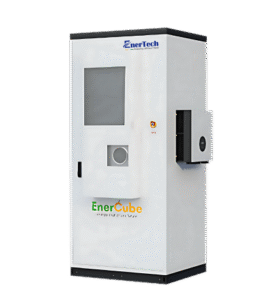
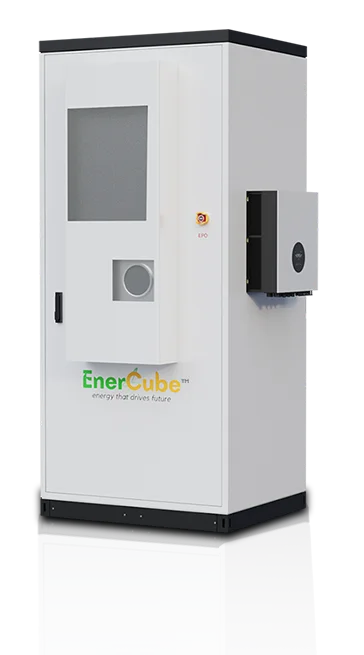
EnerTech’s bi-directional modular PCS enables seamless DC-to-AC and AC-to-DC conversion for hybrid solar storage systems. Advanced DSP-based digital control delivers 97%+ conversion efficiency with parallel operation up to 300kW. Supports grid-tied, off-grid & hybrid modes with DG sync capability. Ideal for solar-plus-storage projects, microgrids & industrial energy management. MNRE approved, IoT ready.
Parameter Specification
Power Rating 50kW to 2MW+ (Modular)
Topology Three-level Neutral-Point-Clamped (NPC)
Switching Devices IGBT Modules (High-frequency)
Conversion Efficiency 97–98% Peak, >96% European
DC Input Voltage 600–1000 VDC (Configurable)
AC Output Voltage 415V, 3-Phase (Custom options available)
AC Frequency 50Hz ±5Hz (Grid-following)
AC Frequency Range 45–55Hz (Grid-forming mode)
Power Factor 0.7 Leading to 0.7 Lagging
Response Time <20ms (Millisecond precision)
Overload Capacity 110% Continuous, 150% for 60 seconds
THD (Current) <3% @ Rated Power
Protection Rating IP54 (Standard), IP65 (Optional)
Operating Temperature -25°C to +50°C
Cooling Method Forced Air or Liquid Cooling
Grid Connection 415V – 33kV (via Transformer)
Communication Modbus TCP/RTU, CAN, Ethernet
Control Modes VSG, PQ, VF, Droop Control
Parallel Operation Up to 32 Units
Black Start Yes, with Battery Capacity
Compliance IEEE 1547, IEC 62933, CEA Grid Code

Product Overview

At the heart of every high-performance battery energy storage system lies intelligent power electronics that seamlessly convert between DC battery voltage and AC grid power. EnerCube’s Multifunctional Power Conversion System represents the pinnacle of 35+ years of power electronics development—delivering bi-directional conversion, advanced grid support functions, and unmatched reliability in a modular, scalable architecture.

Designed for commercial and utility-scale applications requiring 50kW to 2MW+ power output, this three-level IGBT-based PCS provides the flexibility to operate as grid-following inverter, grid-forming source, or hybrid microgrid controller—adapting to changing grid conditions and application requirements.

Why Advanced PCS Technology Matters

Not All Inverters Are Equal

Standard two-level inverters sacrifice efficiency, power quality, and reliability to minimize cost. EnerCube’s three-level topology delivers superior performance across every metric—critical for applications where downtime, poor power quality, or inefficiency directly impact revenue and operations.

Three-Level Topology Advantages

  • Higher Efficiency: 97-98% vs. 94-95%
  • Better Power Quality: <3% THD vs. 5-8% THD
  • Lower Switching Losses: Reduced heat generation
  • Extended Lifetime: Reduced component stress
  • Improved Grid Compatibility: Better harmonic performance
  • Quieter Operation: Lower audible noise from switching

Flexible Operating Modes

Grid-Following Mode (PQ Control)

Standard grid-tied operation where PCS synchronizes with utility grid and injects/absorbs precise active (P) and reactive (Q) power according to commanded setpoints.

Grid-Following Mode (PQ Control)

Standard grid-tied operation where PCS synchronizes with utility grid and injects/absorbs precise active (P) and reactive (Q) power according to commanded setpoints.

Applications:

  • Peak shaving and load shifting
  • Renewable energy integration
  • Demand charge reduction
  • Time-of-use arbitrage
  • Grid services (ancillary services markets)

Grid-Forming Mode (Virtual Synchronous Generator)

PCS creates stable voltage and frequency reference, enabling operation without external grid. Acts as “virtual generator” establishing electrical parameters for island system.

Applications:

  • Microgrid operation
  • Black start capability
  • Weak grid support
  • Remote off-grid installations
  • Emergency backup power

Hybrid Mode (Seamless Transition)

Intelligently switches between grid-following and grid-forming operation based on grid availability and quality. Enables truly seamless backup power without interruption.

Applications:

  • Commercial buildings with critical loads
  • Healthcare facilities
  • Data centers
  • Manufacturing with sensitive processes
  • Telecommunications infrastructure

Advanced Grid Support Functions

Frequency Regulation

Primary Frequency Response (PFR):

  • Detects frequency deviations in <20ms
  • Automatic power injection/absorption to stabilize grid
  • Droop control for proportional response
  • Synthetic inertia emulation (virtual rotating mass)

Secondary Frequency Control:

  • Participates in Automatic Generation Control (AGC)
  • Responds to utility dispatch signals
  • Restores frequency to nominal 50Hz
  • Enables ancillary services revenue

Voltage Support

Dynamic Voltage Regulation:

  • Continuous monitoring of voltage at point of connection
  • Automatic reactive power injection (VAR support)
  • Voltage rise mitigation during high solar generation
  • Voltage sag compensation during heavy loads

Power Factor Correction:

  • Operate from 0.7 leading to 0.7 lagging power factor
  • Independent active and reactive power control
  • Capacitive or inductive VAR generation
  • Minimize utility power factor penalties

Low/High Voltage Ride-Through (LVRT/HVRT):

  • Remain connected during grid voltage disturbances
  • Support grid recovery during fault events
  • Prevent cascading failures
  • Meet utility grid code requirements

Intelligent String Inverter Technology

Battery String Configuration

Unlike centralized inverters requiring parallel battery connections (which create circulating currents and imbalanced aging), string inverter architecture connects batteries in series strings to individual PCS modules.

String Inverter Advantages:

  • Eliminates Circulating Current: No current flow between battery packs
  • Balanced Discharge: Each string utilized equally
  • Modular Redundancy: Single string failure doesn’t disable system
  • Independent MPPT: Optimal performance for each battery string
  • Simplified BMS: No complex pack-to-pack balancing required
  • Enhanced Safety: Reduced fault current, easier isolation

Seamless Grid Transition Technology

Static Transfer Switch (STS) Integration

Built-in or external static transfer switch enables <4ms transition between grid and battery power—imperceptible to connected loads and sensitive equipment.

How It Works:

  • PCS continuously monitors grid voltage, frequency, and phase
  • Grid anomaly detected (outage, undervoltage, frequency deviation)
  • STS opens grid connection in <1ms (semiconductor switching)
  • PCS transitions to grid-forming mode in <3ms
  • Loads experience zero interruption in power supply

Benefits:

  • Protect sensitive equipment from power interruptions
  • Enable true uninterruptible power supply (UPS) functionality
  • Eliminate mechanical transfer switch delays
  • Support “make-before-break” transitions
  • Reduce inrush currents during reconnection

Modular & Scalable Architecture

Building Block Approach

50kW base modules combine in parallel to create systems from 50kW to 2MW+:

  • 50kW Module: Entry-level for small commercial (1 unit)
  • 100-200kW Systems: Stack 2-4 modules for medium commercial
  • 250-500kW Systems: 5-10 modules for large commercial/light industrial
  • 1-2MW Systems: 20-40 modules for utility-scale applications

Parallel Operation Capabilities:

  • Automatic load sharing among modules
  • N+1 redundancy for critical applications
  • Hot-swap capability for maintenance
  • Individual module efficiency optimization
  • Coordinated master-slave control

Advanced Protection Features

DC Side Protection:

  • DC overvoltage/undervoltage protection
  • DC overcurrent limiting
  • Reverse polarity protection
  • DC arc fault detection
  • Battery isolation monitoring
  • Ground fault detection

AC Side Protection:

  • AC overvoltage/undervoltage protection (per-phase)
  • AC overcurrent with I²t curves
  • Short-circuit protection
  • Earth fault detection
  • Phase sequence and imbalance detection
  • Anti-islanding protection (IEEE 1547)

System Protection:

  • Over-temperature with derating
  • IGBT junction temperature monitoring
  • DC link capacitor protection
  • Internal fault detection
  • Emergency shutdown (EPO)
  • Watchdog timer protection

Control & Communication

Local Control Interface:

  • 7″ color touchscreen HMI
  • Real-time power flow visualization
  • Operating mode selection
  • Setpoint adjustment
  • Alarm/event log viewing
  • System diagnostics

Remote Communication:

  • Modbus TCP/IP (Ethernet)
  • Modbus RTU (RS485)
  • CAN bus (battery communication)
  • DNP3 (utility SCADA)
  • IEC 61850 (substation automation)
  • Custom protocol development available

Cloud Connectivity:

  • Secure VPN connection
  • Real-time data streaming
  • Remote configuration changes
  • Firmware over-the-air updates
  • Fleet management dashboard
  • Predictive maintenance alerts

Applications Across Industries

Utility-Scale Energy Storage

  • Transmission and distribution upgrade deferral
  • Renewable energy integration and firming
  • Frequency regulation and grid stabilization
  • Capacity market participation
  • Voltage support and power quality improvement

Industrial & Manufacturing

  • Peak demand reduction for large facilities
  • Power quality improvement for sensitive processes
  • Backup power for critical manufacturing lines
  • Renewable energy integration (solar + storage)
  • Microgrid development for energy resilience

Commercial Buildings

  • Shopping malls and retail complexes
  • Office buildings and business parks
  • Hotels and hospitality venues
  • Hospitals and healthcare campuses
  • Data centers and telecom hubs

Microgrid & Off-Grid

  • Remote communities and island systems
  • Military and defense installations
  • Mining operations and resource extraction
  • Telecommunications infrastructure
  • Emergency response and disaster relief

Performance Metrics

Efficiency Curves:

  • 25% Load: 95% efficiency
  • 50% Load: 97% efficiency
  • 75% Load: 98% efficiency
  • 100% Load: 97.5% efficiency
  • European Weighted Efficiency: 96.8%

Power Quality:

  • Voltage THD: <1% (no load), <3% (full load)
  • Current THD: <3% (all load ranges)
  • Power Factor: Adjustable from 0.7 leading to 0.7 lagging
  • Harmonic Compliance: IEC 61000-3-2/3-4

Reliability Metrics:

  • MTBF (Mean Time Between Failures): >250,000 hours
  • Availability: >99.5% over 20-year life
  • Fault Recovery: Automatic restart after 90% of faults
  • Service Life: 20+ years with periodic capacitor replacement

Thermal Management

Intelligent Cooling System:

  • Variable-speed fans respond to load and temperature
  • Redundant cooling paths for critical components
  • Hot-swap fan modules for easy maintenance
  • Dust filters (cleanable, replaceable)
  • Ambient temperature monitoring and derating

Thermal Monitoring:

  • IGBT junction temperature (per module)
  • DC bus capacitor temperature
  • Transformer/reactor temperature
  • Ambient air temperature
  • Coolant temperature (liquid-cooled models)

Comparison: EnerCube PCS vs. Standard Inverters

Feature EnerCube 3-Level PCS Standard 2-Level PCS
Peak Efficiency 98% 95–96%
THD (Total Harmonic Distortion) <3% 5–8%
Grid Support Functions Full LVRT / HVRT, Frequency Regulation Basic
Operating Modes Grid-forming + Grid-following Grid-following only
Black Start Capability Yes No
Overload Capacity 150% for 60 seconds 110% for 10 seconds
Response Time <20 ms 50–100 ms
Component Stress Lower (Reduced Switching Losses) Higher
Expected Lifetime 20+ Years 10–15 Years
Parallel Operation Up to 32 Units Limited

Installation & Commissioning

Factory Testing:

Every PCS undergoes comprehensive testing before shipment:

  • Full power testing at rated voltage and current
  • Efficiency validation across load range
  • Protection function verification
  • EMI/EMC compliance testing
  • Thermal performance validation
  • Documentation and performance records

Site Installation:

  • Pre-wired enclosures for rapid deployment
  • Standardized connection points
  • Clear labeling and documentation
  • Integration with existing SCADA systems
  • Grid interconnection compliance

Commissioning Process:

  1. Physical installation verification
  2. Electrical connections validation
  3. Battery system integration
  4. Grid synchronization testing
  5. Protection function testing
  6. Performance validation
  7. Operator training
  8. Final acceptance and handover

Service & Warranty

10-Year Comprehensive Warranty:

  • All power electronics components
  • Control systems and software
  • Communication interfaces
  • Fans and thermal management
  • Enclosure and hardware

Extended Service Contracts:

  • 15-20 year coverage available
  • Includes preventive maintenance
  • Spare parts inventory
  • Firmware updates and enhancements
  • 24/7 technical support

Rapid Response Service:

  • Remote diagnostics (80% issue resolution)
  • 24-hour on-site response for critical failures
  • 48-hour repair completion
  • Loaner equipment for extended repairs
  • Annual preventive maintenance visits

Technical Support Services

Pre-Sales Engineering:

  • Application analysis and system sizing
  • Grid interconnection study support
  • Single-line diagram development
  • Equipment selection and specification
  • ROI and financial modeling

Post-Sales Support:

  • Installation supervision and commissioning
  • Operator training programs
  • Performance optimization
  • Troubleshooting assistance
  • Ongoing technical consultation

Get Your Advanced PCS Solution

Step 1: Application Assessment

Detailed analysis of electrical requirements, grid characteristics, and operational objectives.

Step 2: System Configuration

Custom PCS configuration including power rating, voltage levels, control modes, and communication protocols.

Step 3: Engineering Package

Complete technical documentation including drawings, specifications, and integration requirements.

Step 4: Factory Acceptance Testing

Witness testing at manufacturing facility to validate performance before shipment.

Step 5: Installation & Commissioning

Professional installation, comprehensive testing, and operator training for successful deployment.

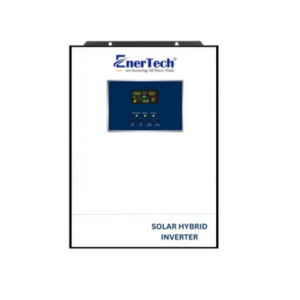
Successful Installation of Solar Hybrid Inverter

Delivering success through 35,000+ satisfied customers over the past 35+ years with our impeccable Battery Energy Storage System Installation.

Enertech

Helpful Faq’s

Yes, EnerTech offers customization options for the SFC to tailor it to specific frequency conversion needs, including input/output frequency ranges, power ratings, and control features.

Yes, the converter includes built-in monitoring and control features accessible via web-based interfaces or network management systems for remote management and diagnostics.

Key factors to think about are the frequency conversion range, input and output voltage compatibility, power rating and capacity, efficiency and performance, protection features, remote monitoring capabilities, environmental suitability, and manufacturer reputation.

A static frequency converter can support a wide variety of loads, including motors, pumps, compressors, lighting systems, and other electrical equipment requiring precise frequency control. 
    Book A Call With Our Sales Expert

    Related Products

      Call Now Button