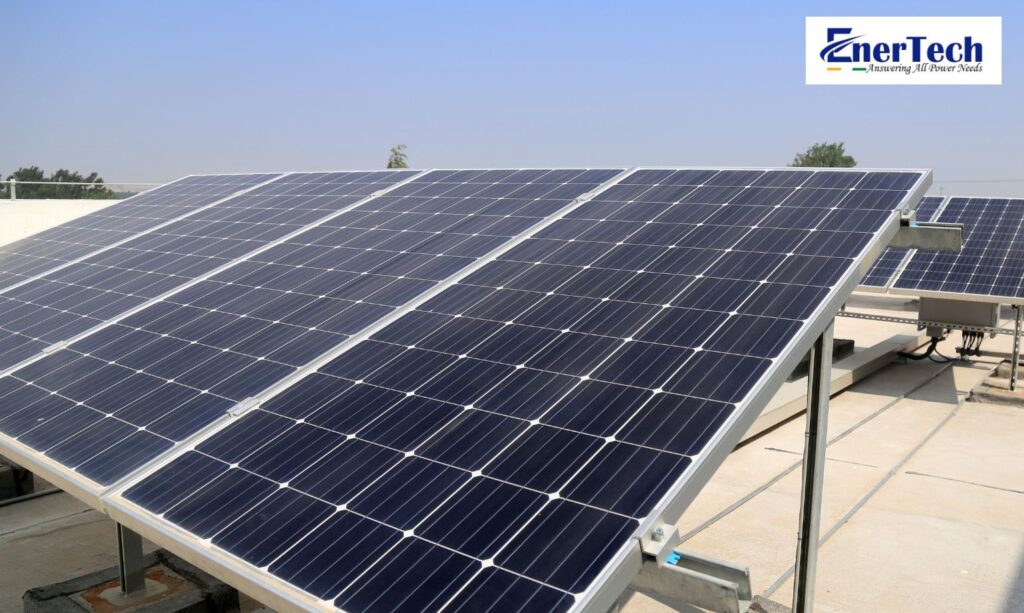
Solar inverters have emerged as a vital component of every solar system. These convert direct current (DC), generated by the solar panel to alternating current (AC), used by the grid. They allow the solar power system to power the entire home and its appliances. Hence, the choice of solar inverters matters. Here’s how to choose solar inverter.
Core Inverter Topologies On Grid Off Grid and Hybrid
On grid string inverters suit facilities with reliable utility power seeking strictly to reduce daytime electricity bills. These units synchronize directly with the utility grid but cannot provide power during electrical blackouts. Off grid solar inverters suit remote industrial sites, agricultural operations, and locations without grid access. Off grid systems store solar energy in battery banks to maintain continuous standalone power delivery. Hybrid solar inverters represent the most versatile choice for enterprises facing intermittent grid outages. A hybrid system provides grid export capability combined with dedicated battery storage backup protection.How to choose solar inverter
A solar inverter plays a crucial role in making people energy self-sufficient. Accordingly, a careful review of various essential factors is a must while choosing a solar inverter.
1. The Inverter’s Efficiency and MPPT Performance
An inverter’s efficiency is calculated as the ratio of output power to input power measured under specific working conditions. The highest conversion efficiency is about 97-98%. Computing an inverter’s efficiency according to your energy needs could be technically complicated. Hence, you must consult the inverter supplier, discuss your energy needs and make the right choice aligned with your requirements.
Inverter efficiency directly determines how much captured solar power converts into usable AC electricity. Look for maximum efficiency ratings exceeding ninety seven percent and European efficiency above ninety six percent. Advanced Maximum Power Point Tracking algorithms adjust voltage and current in real time as sunlight shifts. Multiple independent MPPT channels are essential if your facility roof features different slope angles or shading. Enertech inverters incorporate high speed digital signal processors ensuring ninety nine percent MPPT tracking accuracy.2. Solar Inverter’s Durability and Galvanic Protection
Solar inverters are usually positioned outside a particular structure. Hence, it is evident that they should be durable enough to sustain diverse weather conditions. So, you should inspect if the inverter has a hard shell or a technology that optimizes its efficiency across various weather. High and low temperatures affect the PV system’s voltage. Maximum voltage beyond the specification may harm the inverter, and very low voltage can freeze its functioning. So, an all-weather inverter should be your choice.
Indian industrial operating environments subject power equipment to extreme summer heat and airborne dust. Ensure the inverter carries an operational ambient temperature rating up to fifty degrees Celsius without thermal derating. Industrial settings require robust enclosures rated from IP20 for indoor clean rooms to IP54 for outdoor installations. Built in copper wound galvanic isolation transformers protect sensitive facility loads from raw grid voltage spikes. Rugged sheet metal cabinets and conformal coated internal circuit boards resist industrial corrosion and humidity.3. Solar Inverter Price and Total Cost of Ownership
Solar inverter price is a pivotal factor, although it shouldn’t be the only one. Remember, embracing solar energy is a visionary decision made from a long-term perspective. Hence, you shouldn’t remain rigid on the cost a lot. Consider it an investment and invest in top-of- the-line solar inverters that serve you for long and reap optimal returns in the long run. Nevertheless, if you are tight on the budget, you may opt for a grid-connected inverter that can help you save energy bills through net metering. But if you can stretch your budget, you can go for off-grid inverters that will reduce your dependence on the grid and help you become significantly self-sufficient in terms of electricity.
Purchasing the cheapest inverter frequently results in expensive plant shutdowns and high repair costs later. Evaluate total cost of ownership over a ten year horizon including reliability, efficiency, and spare parts availability. High efficiency inverters generate significantly more kilowatt hours over their lifespan, offsetting higher upfront costs. Consider tax benefits such as accelerated depreciation on commercial renewable power equipment in India. Enertech systems offer superior engineering reliability, delivering proven payback within three to four years.4. Sizing for Your Facility Energy Needs and Surge Demands
It is prudent to compute your energy needs before you make a choice. Knowing your energy needs will help you calculate the size of your inverter. For instance, if you are looking for a 20kW system for solar panels, you should buy an inverter that supports the requirement by generating the required amount of energy. However, experts advise buying an inverter with a capacity a little higher than your requirement. It can help you compensate for the energy losses in the system.
Accurately calculate your facility continuous running wattage and peak instantaneous motor starting inrush currents. Induction motors, pumps, and refrigeration compressors draw starting currents three to five times their running rating. Select an inverter with an overload withstand capability of one hundred fifty percent for at least sixty seconds. Determine whether your facility requires single phase 230V or industrial three phase 415V power distribution. Ensure the inverter DC input voltage window comfortably accommodates your intended solar panel string sizing.5. Solar Inverter Brand Reputation and On Site Support
This one could be a little tricky. It isn’t because you don’t have as many quality brands in the market, but many. However, here it isn’t necessarily about choosing the best but the one that suits your needs and helps you reap optimal and sustainable returns. Selecting a solar inverter brand can be equally time-consuming. You cannot just choose any brand for the sake of it. A solar inverter is a significant investment. Hence, you should stay careful and concerned enough while reviewing various solar inverter brands. Some factors to look for include the brand’s reputation, experience in the solar market, online reviews, offline feedback, and after-sales reputation. All these factors would affect your returns. Hence, it is necessary to invest time and thought while choosing a solar inverter from a credible brand.
A solar inverter is a multi decade operational asset that requires dependable long term manufacturer support. Choose established domestic manufacturers with proven engineering track records and readily available replacement parts. Verify whether the brand provides factory trained on site service engineers across major industrial clusters. Enertech brings over three decades of field proven power electronics manufacturing experience across India. Our nationwide technical support network ensures rapid response times and minimal operational downtime.Choose Enertech for Solar Inverters that Serve Optimally and Last Long!
Enertech has an answer for your search for premium-quality solar inverters. We’ve been serving in the solar business for years and have built an unmatched reputation through results that also forms the reason for our success. We focus on sustainable value and this approach of ours reflects in our products, to which inverters aren’t an exception. We provide exceptional consulting and remarkable after-sales support that enables our clients to make the right choice and nurture it for a long time. Click here to explore our solar inverter product range, or please email us at sales@enertechups.com to know the solar power inverter cost.
Enertech engineers solar inverters specifically designed to master demanding Indian electrical grid challenges. From 5kVA single phase commercial units to 300kVA three phase industrial systems, we deliver uncompromising reliability.Contact our application engineering team today to review your electrical loads and select the perfect inverter.